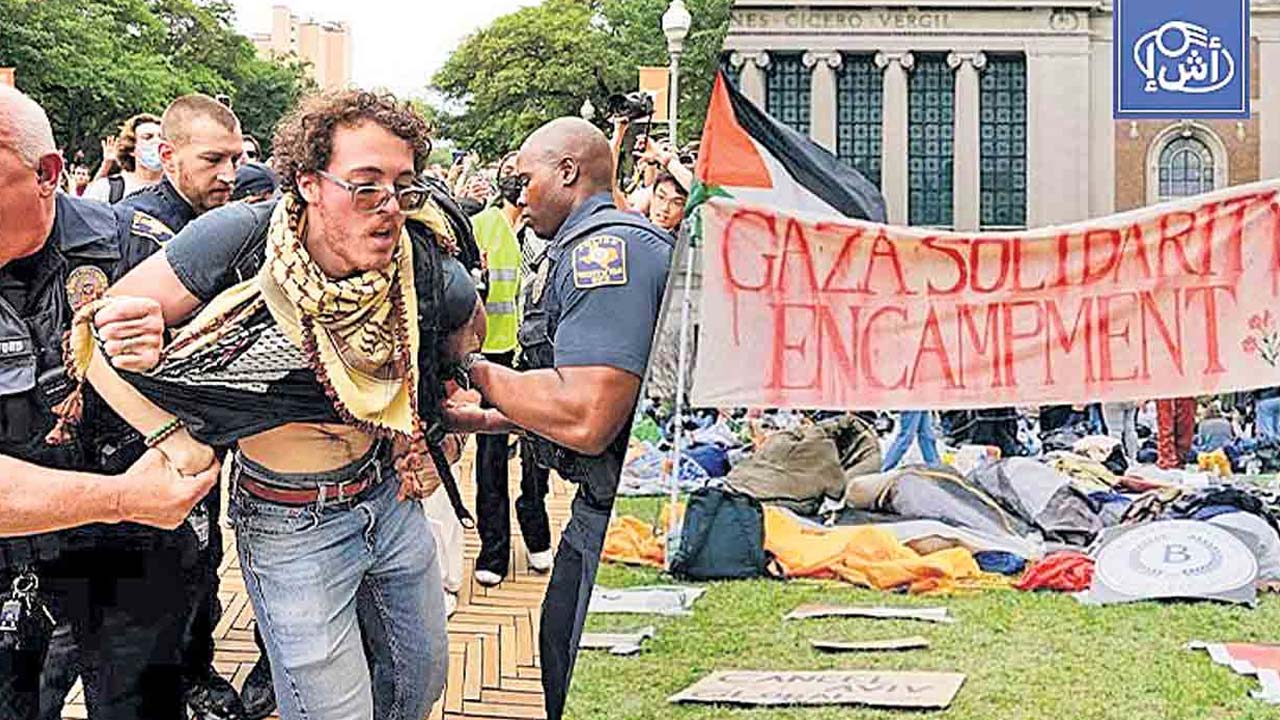
A wave of protests is spreading across American universities. Megha, a young woman born and raised in a Telugu family in Georgia, USA, displayed remarkable courage, but her boldness is not unique to her alone. In the past two years, several students from Andhra Pradesh and Karnataka who moved to the US have also raised their voices against government oppression and illegal policies. Typically, Telugu students pursuing undergraduate and postgraduate courses tend to avoid political protests, but Megha, who studied Computer Science, Neuroscience, and Linguistics during her four-year undergraduate program at MIT, was banned from participating in the graduation ceremony due to a speech she gave on May 29. Megha's father, Sharath Vemuri, said her diploma would be sent home. The US government, led by President Donald Trump, has already taken action against several international students who spoke against America’s stance on the Israel-Palestine conflict. Although courts have often blocked attempts to revoke visas, Megha’s democratic speech highlighted the importance of constitutional values to people worldwide.
The early October 2023 Hamas attacks from Gaza on Israel have brought despair to humanity. For the past two and a half years, Israeli forces have bombarded Gaza’s hospitals and blocked food and water supplies to Palestinian Arabs, leading to a humanitarian crisis where not a single university remains in Gaza, a shameful fact highlighted by Megha in her MIT speech. Meanwhile, former US President Donald Trump continues to claim he wants to annex Gaza. From early 2024, white and international students at American universities have been protesting against the brutal attacks on Gaza civilians, echoing the student movements from the late 1960s that opposed the Vietnam War. That era saw massive student protests in the US against the imperialistic war, which eventually influenced foreign policy changes.
Between 1965 and 2025, significant political shifts have taken place in American public opinion. America, once seen as a beacon of democracy, began showing anti-democratic tendencies in the 1980 presidential election with the victory of Republican Ronald Reagan. These authoritarian and oligarchic trends deepened with George W. Bush’s presidency in 2000 and culminated in Donald Trump’s 2016 election. Ahead of Trump’s potential re-election in late 2024, protests against Israel have surged in American universities. Yet, the widespread anti-war and democratic activism seen during the Vietnam era has not re-emerged strongly, raising questions about whether Americans have become resistant to change. Students like Megha Vemuri, active in anti-imperialist movements such as "Written Revolution" at MIT, continue to fight for democratic values, but only time will tell if democracy will regain its strength in America.