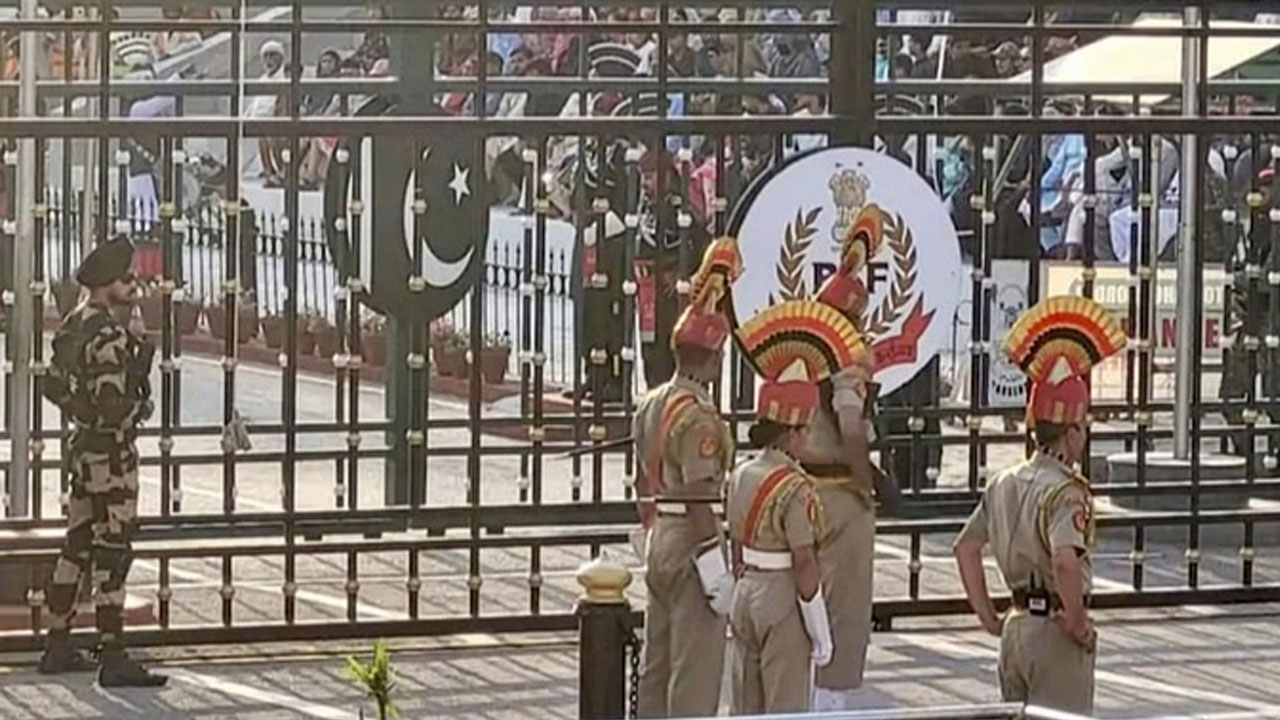
After the terrorist attack in Pahalgam, the Indian government ordered Pakistani nationals to return to their country within 48 hours. Following this, Pakistani citizens started arriving at the Attari border from 8 AM on Thursday. After verifying their documents, the BSF officials allowed them to cross the border. By 8 PM, 104 Pakistani nationals had returned to their country, while at the same time, 29 Indian citizens came back from Pakistan. As usual, the BSF conducted the Beating Retreat ceremony at the Wagah border, but during this time, the gates were closed. Tourists who had come to watch the ceremony were sent back. However, after a short while, permissions were granted, and the situation was allowed to proceed. Normally, over 25,000 tourists visit the Beating Retreat ceremony every day, but on Thursday, the number was only around three to four thousand.
Meanwhile, Mahmood Ahmed, who returned to Pakistan through the Attari border, mentioned that he had come to India a few days ago to meet his relatives. He expressed his desire for peace between the two countries and hoped that people on both sides could meet each other. On the other hand, Seema, a woman from Kanpur, arrived at the Attari border but was not allowed to go to Pakistan. She tearfully said that her sister, Chanda Aftab, was in Karachi and suffering from health issues. She had received a visa from Pakistan to meet her but was now being denied permission to travel to Karachi. She complained about the difficulties they were facing due to the actions of terrorists.
Meanwhile, the government issued orders to close the IPC. India has been conducting trade with Afghanistan, with trucks coming from Pakistan. Currently, trucks that reach the IPC have been given permission, but there is a possibility that the entire route may be closed in the coming days. This could lead to significant losses for local traders, who will now have to place orders for goods through alternative routes from Afghanistan. As a result, there is a chance that prices may rise.