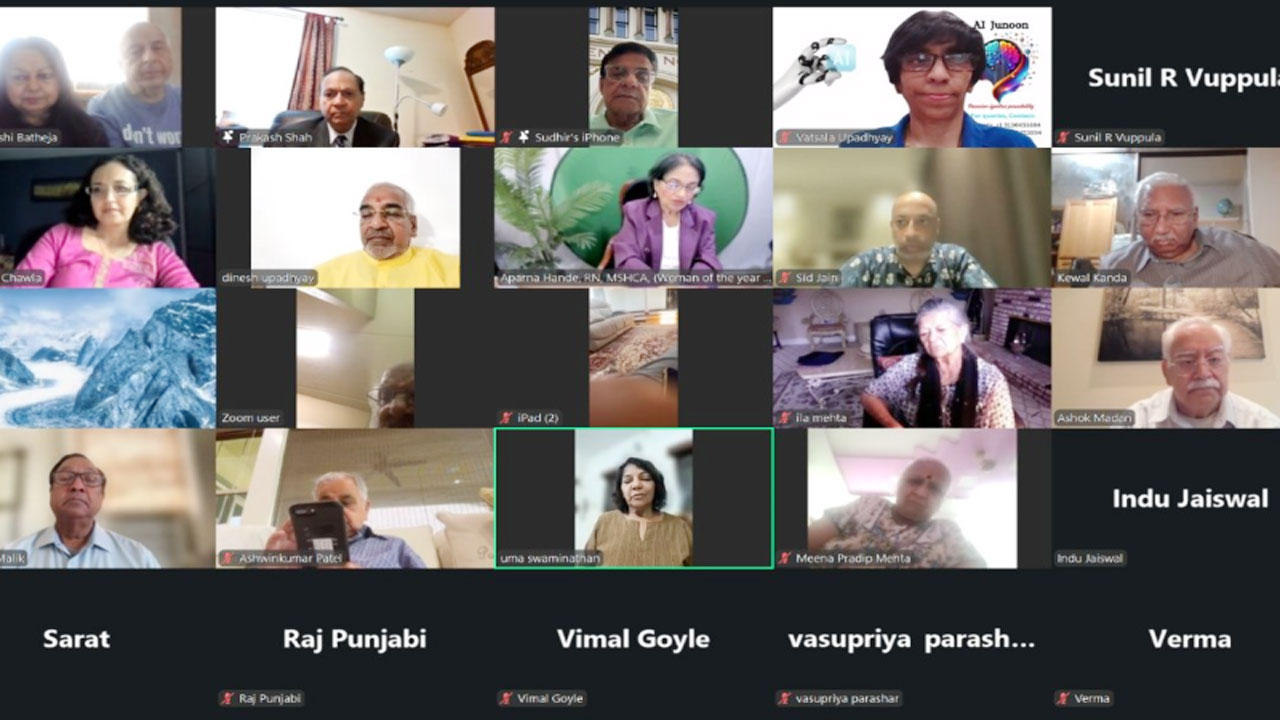
Los Angeles, California, USA: The webinar featured Padma Shri awardee Dr. Sudhir Parikh, a leading allergist and immunologist, as the Chief Guest.
The Global Organization of People of Indian Origin (GOPIO) organized its third session in the ongoing webinar series, titled “Indian Medicinal Wisdom: Strategies for Modern Maladies.”
Held on September 13, the discussion brought together experts in both ancient and contemporary medicine, practitioners of integrative healthcare, community leaders, and participants from around the world to exchange knowledge and share best practices.
Aparna Hande, a public health leader and community advocate, and Medical Council Co-chair of GOPIO, moderated the session. She began by emphasizing the importance of active engagement from the global Indian Diaspora and highlighted how combining evidence-based traditional practices with modern medicine can benefit both prevention and treatment.
Sunil Vuppala, GOPIO Associate Secretary and Chair of the Webinar Series, welcomed the attendees, while GOPIO Chairman Dr. Thomas Abraham shared the organization’s 30-year history.
Padma Shri awardee Dr. Sudhir Parikh, also president-elect of the Global Association of Physicians of Indian Origin (GAPIO) representing 1.4 million Indian doctors worldwide, was the session’s Chief Guest. He praised the synergy between Ayurveda and modern medicine, stating, “Both Ayurvedic and modern treatments can be effective for certain illnesses, provided the traditional remedies meet proper quality and dosage standards.”
Cardiologist and Public Health Professor Dr. Indranill Basu-Ray, Director of Research and Chair of the GOPIO Medical Council, also participated. A long-time advocate of Yoga, he noted, “Yoga is not a religion; it is a way of life. Healthy lifestyle choices remain the most effective medicine, supported by modern research.”
Dr. Nirmal Joshi, CEO of Joshi Health Foundation, presented on “The Epidemic of Heart Attacks in Young Indians – The Crisis and the Solutions.” He highlighted the rising incidence of severe and early heart attacks among Indians, stressing the need for urgent intervention.
Pulmonologist Dr. Tina Shah, a public health advocate and Democratic candidate for New Jersey’s NJ-07 Congressional seat, addressed “Ancient Wisdom in Healthcare and Medicine.” She discussed integrating traditional health practices with modern scientific approaches. Dr. Shah remarked, “Clean air is vital for the health of every organ in the body. Public health strategies must focus on reducing air pollution.”
Endocrinologist and diabetes specialist Dr. Renu Joshi spoke on “Not So Sweet! – Unmasking Diabetes in Indian Communities.” She highlighted the surge in diabetes cases and underscored lessons from ancient Indian preventive practices. Dr. Joshi stated, “Although diabetes is an age-old disease, it can often be prevented through healthy living, meditation, and regular screenings. Traditional medicines may help in prevention, while modern medicine is essential when the condition progresses.”
From India, Dr. Dinesh Upadhyay, a Naturopath, Yoga, and Ayurveda expert, and former National Co-Convener of the BJP Medical Cell, joined the discussion. He currently serves as Sampark Pramukh for Delhi Pradesh with Chikitsak Sangh and Arogya Bharati. Dr. Upadhyay emphasized, “Ancient Indian medicine can complement mainstream healthcare, promoting wellness, preventive care, and effective treatment.”
The final speaker, Ms. Chhavi Chawla, a Health Advisor, environmental activist, and Millet Ambassador, also founder of a philanthropic trust and author of “Live Healthy, Lifelong”, encouraged holistic living. She said, “If your diet is right, medicine is unnecessary; if it’s wrong, medicine alone cannot help.”
GOPIO General Secretary Siddharth Jain concluded the session by thanking participants and calling for continued collaboration, education, and dialogue within the global Indian Diaspora community.