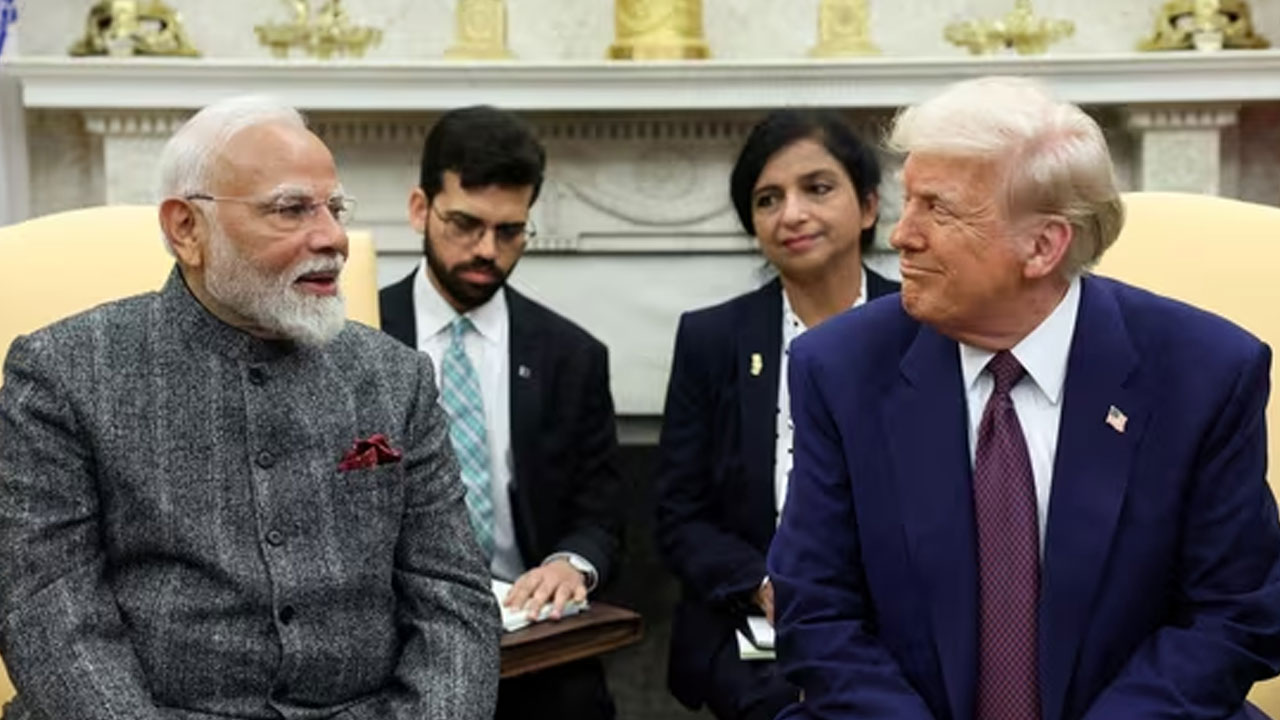
Washington, DC, USA: With trade talks between India and the United States still unresolved, a senior aide to US President Donald Trump has made a striking revelation about why a potential agreement failed to materialize. US Commerce Secretary Howard Lutnick claimed that negotiations were nearly complete, but the process stalled because Indian Prime Minister Narendra Modi did not personally contact Trump.
Lutnick said he had laid the groundwork for the agreement, but insisted that a direct call from Modi to the US President was necessary to close the deal. Speaking on a podcast hosted by entrepreneur Chamath Palihapitiya, Lutnick recalled that Indian officials were hesitant about such a move, which ultimately led to the talks falling apart.
He later added that India and the US were extremely close to sealing the agreement, but described New Delhi as being on the unfavorable side of the negotiating balance.
According to Lutnick, the United States finalized or was preparing to finalize trade agreements with countries such as Indonesia, Vietnam, and Philippines during the same period. However, he noted that India was originally expected to conclude its deal even earlier than those nations. He claimed that discussions with India were conducted at a higher tariff level, making the talks more complex.
These comments surfaced shortly after Trump suggested that existing tariffs on India could be sharply increased if New Delhi failed to cooperate with Washington on the Russian oil matter.
Trump stated that India wanted to maintain good relations with him and acknowledged that Modi understood his dissatisfaction. He added that tariffs could be raised swiftly if required.
50 Percent Tariffs and Indias Firm Position
In August last year, the United States imposed 50 percent tariffs on Indian goods, citing Indias continued energy trade with Russia. Since then, the US administration has attempted to use these steep duties as leverage to push India away from purchasing Russian oil.
India, however, has consistently argued that its energy procurement decisions are based on market availability and domestic consumer needs. In October, Union Minister Piyush Goyal made it clear that India would not negotiate under short-term pressure.
Goyal emphasized that while India remains open to dialogue with Washington, it does not accept imposed timelines or coercive tactics. He stated that agreements are not made hastily or under threat.
Could India Face 500 Percent Tariffs?
Concerns of an even steeper tariff increase have emerged after US Senator Lindsey Graham claimed that Trump had approved a proposed Russia sanctions bill. The legislation seeks to expand penalties not only against Moscow but also against nations that continue to trade with it, including India.
Under the proposed Sanctioning Russia Act of 2025, the US President would be required to raise tariffs to at least 500 percent on all goods and services imported from countries that knowingly engage in the trade of Russian-origin uranium and petroleum products.
The bill is designed to pressure Russia to halt its military actions in Ukraine by threatening its trade partners with severe economic consequences.