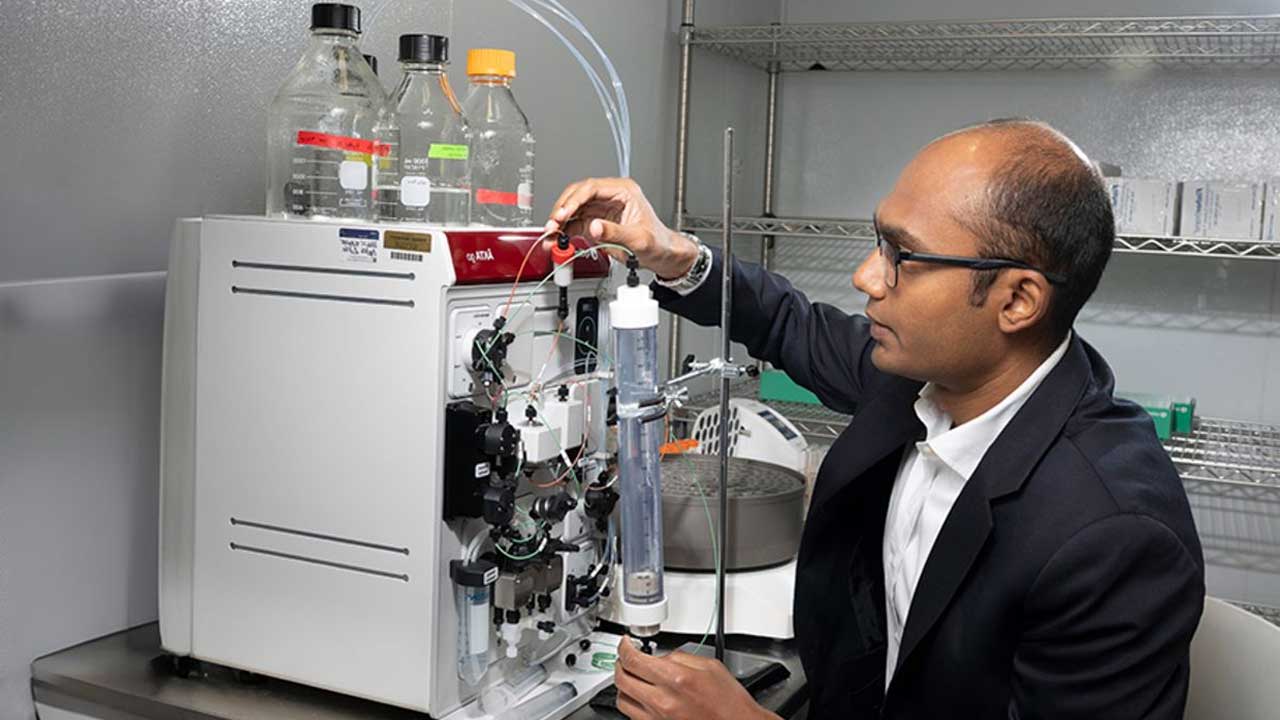
Sacramento, California, USA: Karthik Sankaranarayanan, an assistant professor at Purdue University, has received major support from the U.S. National Science Foundation (NSF) to advance sustainable plastic alternatives. His research group has been awarded $7 million to design innovative enzymes capable of transforming renewable resources into durable, biodegradable plastics.
The project aims to address one of the largest global environmental issues: plastic waste. While the plastics industry is valued at nearly $1 trillion, less than 10% of all plastic produced is recycled. Most of it is either burned or dumped in landfills, creating long-term ecological damage.
Sankaranarayanan, who teaches in Purdue’s Department of Agricultural and Biological Engineering, is leading the initiative to create bioplastics that can match the strength and flexibility of petroleum-based plastics. Instead of relying on imported oil and gas, his team plans to use domestically sourced feedstocks such as corn, sugar, and agricultural byproducts to manufacture degradable polymers.
“Nearly all plastics today — about 99% — come from petrochemicals tied to oil and natural gas, much of which is imported,” Sankaranarayanan explained. “Our goal is to leverage resources available locally, particularly in Indiana, to reduce dependence on fossil fuels while supporting sustainable production.
A key advantage of the materials being developed is recyclability. Sankaranarayanan emphasized that these bioplastics can be broken down into their original chemical units and reused multiple times, creating a closed-loop system.
The three-year project centers on biocatalysis, a process that uses engineered enzymes to accelerate specific chemical reactions without relying on harsh chemicals or extreme conditions. This approach is expected to make bioplastic production cleaner, more efficient, and scalable.
Once Purdue scientists engineer the enzymes, they will be tested at Stanford University to measure their performance. The results will return to Purdue for further optimization, where researchers will assess both reaction speed and the ability to modify polymer structures. In the final stage, experts at the University of California, Berkeley will study the materials’ physical properties, commercialization opportunities, and microbial engineering strategies for large-scale biomanufacturing.
To support this effort, Twist Bioscience, a California-based biotechnology company, will provide advanced tools to help engineer the required enzymes. Emily Leproust, co-founder and CEO of Twist, highlighted the partnership, noting:
“Collaborating with Purdue demonstrates how complex genetic sequences can be applied in real-world solutions. This allows Twist to improve its capacity to produce sequences that were once considered extremely difficult, turning challenges into routine successes.”
She added that the project exemplifies how innovation and collaboration can expand the limits of discovery and unlock applications across industries.
The initiative is being funded through the NSF Directorate for Technology, Innovation and Partnerships, under the Use-Inspired Acceleration of Protein Design program, which supports pioneering research with strong commercialization potential.