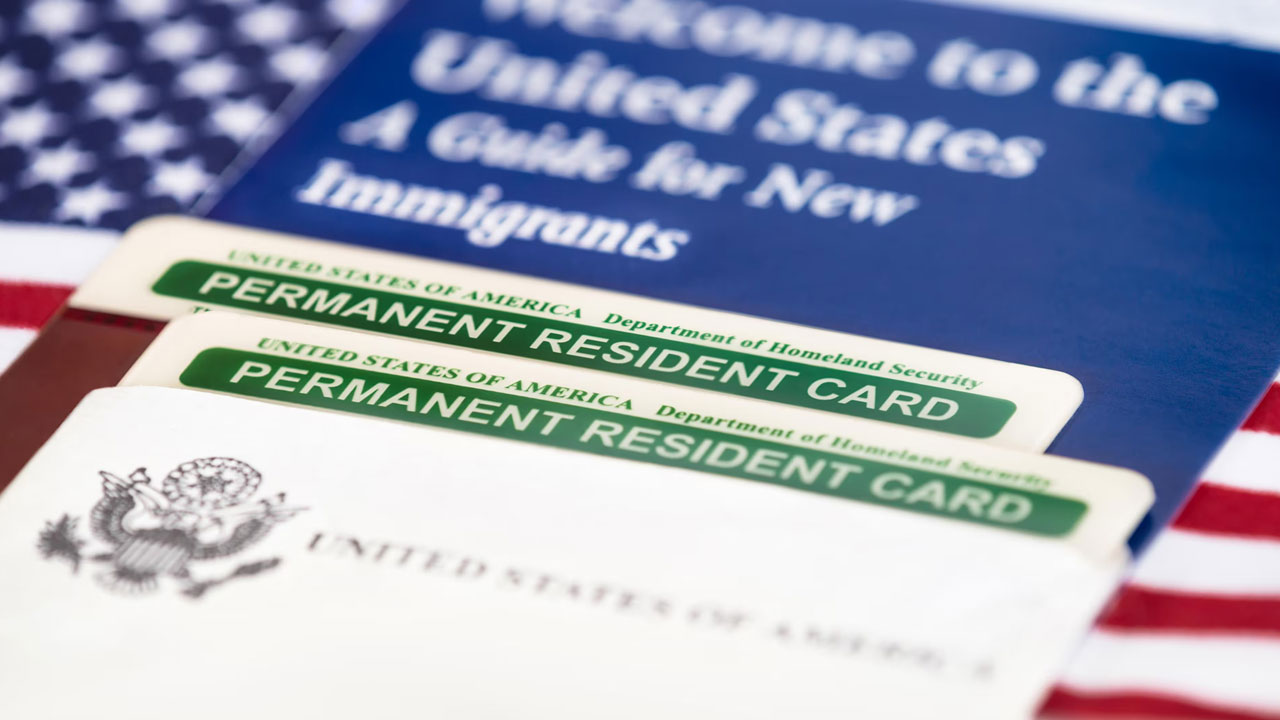
Washington, D.C., USA: The U.S. government can now obtain credit reports and credit scores of individuals who financially sponsor certain immigrants seeking permanent residency under a revised Affidavit of Support that took effect August 31.
U.S. Citizenship and Immigration Services (USCIS) published a new edition of Form I-864, Affidavit of Support Under Section 213A of the Immigration and Nationality Act, on August 31. The new form, dated August 24, 2026, includes a privacy release authorizing USCIS to request information about a sponsor from one or more consumer reporting agencies.
The change could affect U.S. citizens and lawful permanent residents who financially sponsor relatives applying for green cards, as well as joint sponsors in cases where the petitioning relative does not have sufficient income.
By signing Form I-864, a sponsor makes a legally enforceable commitment to financially support the intending immigrant. The form is required in most family-based immigration cases and certain employment-based cases.
Under the revised form, sponsors authorize USCIS to obtain or verify information from consumer reporting agencies, including credit reports and credit scores, to help determine whether the Affidavit of Support is sufficient.
No minimum credit score announced
The revised rule does not establish a minimum credit score that a sponsor must have.
USCIS has not announced a specific credit-score threshold. The agency also has not stated that poor credit, high credit-card debt, missed payments, collections or a previous bankruptcy would automatically disqualify an individual from sponsoring an immigrant.
It also remains unclear how heavily credit information will be considered in USCIS decisions or under what circumstances the agency will request a sponsor's consumer report.
The change provides immigration authorities with another potential source of financial information, but it does not replace the existing income requirements for sponsors.
Generally, a sponsor must demonstrate household income of at least 125% of the applicable Federal Poverty Guidelines. Certain active-duty members of the U.S. armed forces who sponsor a spouse or child may qualify at 100% of the applicable poverty guideline.
Sponsors typically demonstrate their financial ability through federal income tax information and evidence of current income. Depending on the circumstances, assets, qualifying household income or a joint sponsor may also be used.
What happens if a sponsor has a credit freeze?
USCIS has specifically addressed sponsors who have placed a credit or security freeze on their consumer reports, a precaution commonly used to help prevent identity theft.
The agency warns that a freeze could prevent it from obtaining information needed to determine whether Form I-864 is sufficient.
USCIS states in its guidance that if a sponsor has a credit or security freeze on their consumer or credit report file, the agency may not be able to access the information required to assess the sufficiency of the Affidavit of Support.
USCIS advises sponsors to respond promptly if they receive a request to release the freeze in order to avoid potential delays.
The agency's guidance does not state that every sponsor must proactively remove a credit freeze before submitting Form I-864.
No grace period for the previous Form I-864
The rollout also includes an important procedural change for people currently preparing green card applications.
USCIS said there is no grace period for using the previous version of Form I-864.
For forms postmarked or electronically submitted on or after August 31, 2026, USCIS will accept only the new 08/24/26 edition. The agency will not accept or process the previous 10/17/24 edition for filings made on or after that date.
The American Immigration Lawyers Association (AILA) has raised concerns about the immediate implementation of the revised form. AILA said it requested a grace period and is considering litigation over the rollout.
How will USCIS use credit information?
For immigrants and their sponsors, one of the biggest unanswered questions is how USCIS intends to use the newly available credit information.
The revised Form I-864 gives the agency access to financial information beyond the tax returns, income and assets traditionally associated with the Affidavit of Support.
However, USCIS has not published a specific formula explaining how a sponsor's credit report or credit score will be weighed when determining whether the sponsor has sufficient financial resources.
For now, a low credit score should not be interpreted as an automatic bar to sponsoring a green card applicant.
The existing income requirements remain in place, while credit information becomes an additional financial tool that USCIS may use when evaluating a sponsor's financial ability.