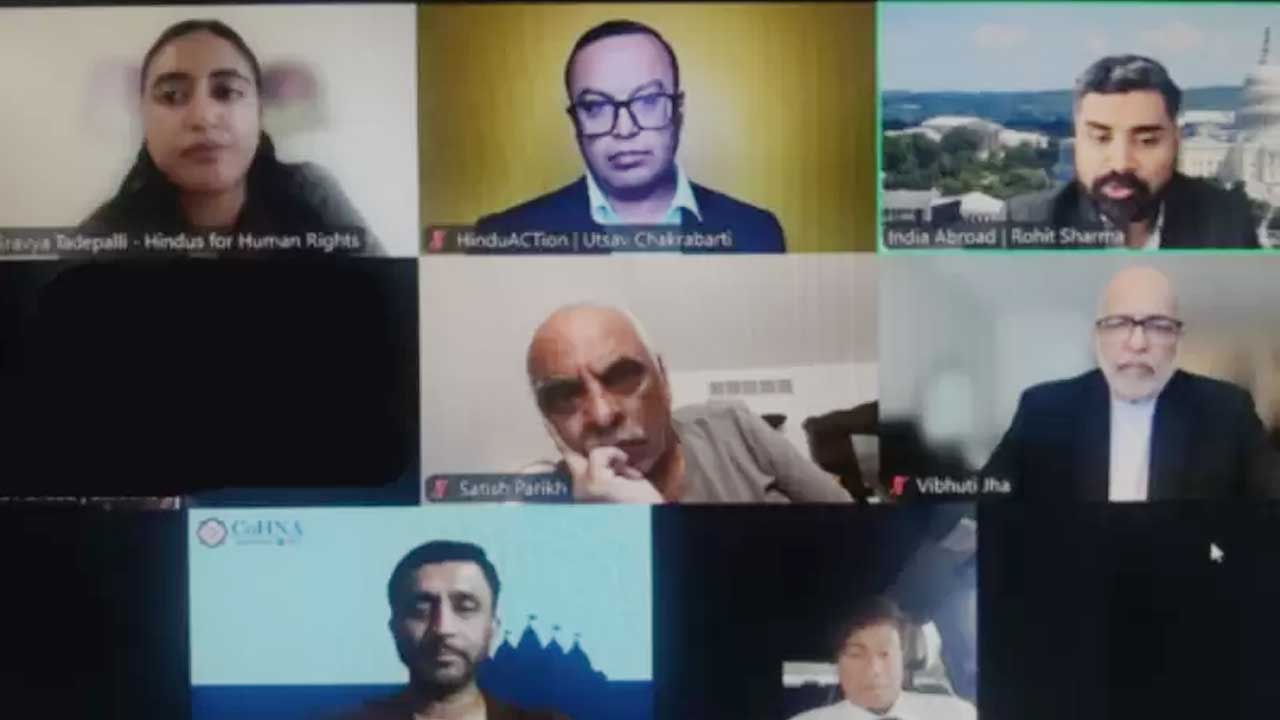
Dallas, Texas, USA: The virtual event United Against Hostility began with a solemn tribute to Chandra Mouli Nagamallaiah, a 50-year-old motel manager who lost his life on September 10.
On September 22, Indian American Congressman Shri Thanedar addressed the community online, urging action in response to the tragic loss of Nagamallaiah, an immigrant from India, in Dallas earlier this month.
“Our voices matter. We need to step up and show our activism,” Thanedar stressed during the webinar hosted by India Abroad Dialogue, moderated by journalist Rohit Sharma. The session was attended by advocacy groups, leaders, and lawmakers.
Authorities reported that Nagamallaiah was attacked and fatally injured with a machete by a guest at his motel, in front of his family members who tried to intervene. The shocking incident has left the Indian American community in deep fear and sorrow.
Thanedar, who serves as the Ranking Member on the Homeland Security Oversight Committee, warned of the escalating hate-related incidents against immigrants and religious minorities. “This isn’t a one-off. We’ve seen vandalism at temples, hostility against Hindus, and aggression toward immigrants. The trend is growing,” he said.
He added that although he had raised the matter with federal and local authorities, incidents involving Asian and Indian Americans often do not receive the urgency they deserve. “We cannot remain silent. We must demand accountability and push for action,” he urged.
Melanie Royer, representing Texas Congressman Pat Fallon, expressed her office’s deep concern over the case. “We’re horrified by this tragedy and committed to supporting the community. Staying connected with us helps ensure your voices are heard,” she said.
Community entrepreneur Ajay Bhutoria remembered Nagamallaiah as “a hardworking immigrant pursuing the American dream,” calling the loss “similar to a terrorist-style attack.” He criticized the slow response from the federal government, saying, “If this had happened to a white American, the outrage would have been immediate. But because it was an immigrant, silence followed.”
Nikunj Trivedi, president of the Coalition of Hindus of North America (CoHNA), said the case has shaken the diaspora. He also referenced a recent incident in South Carolina where a Gujarati woman was shot during a robbery, warning of a growing pattern of attacks. He emphasized that online hate must not be dismissed, as it often translates into real-world harm.
Sravya Tadepalli of Hindus for Human Rights highlighted the risks faced by Indian Americans working in hotels, motels, and gas stations, calling them “pillars of society who remain extremely vulnerable.” She criticized attempts to politicize the tragedy, stressing that an offender’s immigration status has no bearing on their likelihood to commit harm.
The National Federation of Indian American Associations (NFIA) echoed calls for unity. Leader Satish Parikh noted, “We often succeed individually but fail to unite. By sharing knowledge, resources, and engaging with local communities, we strengthen our collective voice.”
Utsav Chakrabarti, executive director of HinduAction, pointed to online hate campaigns against Hindus in Dallas prior to the case, stressing how digital hostility can escalate into physical aggression. Atlanta community leader Subash Razdan urged temples to appoint representatives to work closely with lawmakers.
New York-based activist Vibhuti Jha labeled the incident as a “beheading” and compared it to terrorist brutality. He urged Indian associations to collectively speak out, saying, “Condemnation isn’t political—if hundreds of organizations unite, the impact will be powerful.”
Geeta Sikand of Americans for Hindus PAC called for a joint statement asserting that the security of Indian Americans is non-negotiable. Meanwhile, Texas community member Arun insisted on a thorough investigation, questioning whether the act was personal conflict or targeted hatred.
From Ohio, Renu Rajvanshi Gupta pushed for greater accountability, saying, “Temples must take responsibility too. Indian Americans are being left vulnerable—we need action locally and nationally.”
Journalist and host Rohit Sharma closed the program by stressing that this was just the beginning. “This is the first of many conversations. The goal is to create a platform where every voice is heard, from social issues to trade to security.”
Throughout the event, panelists emphasized unity, vigilance, and stronger engagement with both lawmakers and law enforcement. The overarching message was clear: Indian Americans, especially working-class immigrants and temple communities, must not be left unprotected against rising threats.