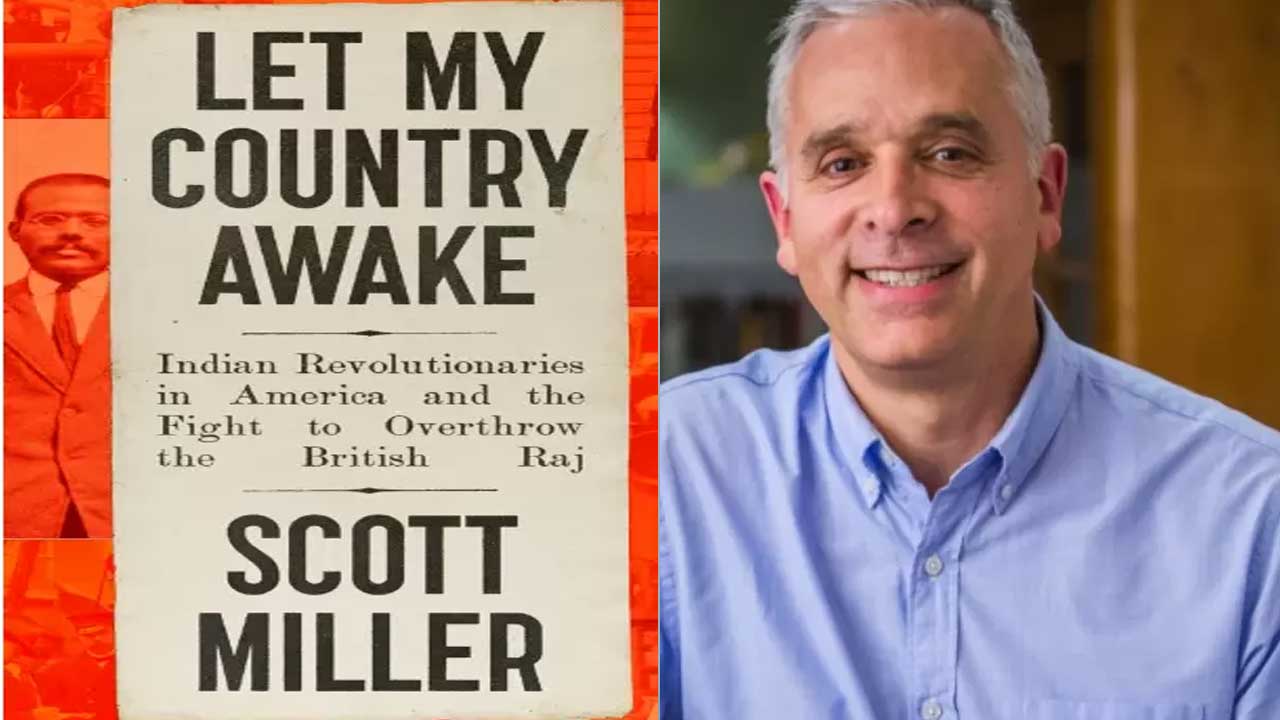
Washington, U.S.A: Author and former Wall Street Journal correspondent Scott Miller sheds new light on a forgotten chapter of Indian and American history in his latest book, Let My Country Awake, released on October 28. The book chronicles the rise of the Ghadar movement, a revolutionary struggle launched by Indian immigrants in the U.S. West Coast before World War I to challenge British colonial rule in India.
Founded mainly by Sikh labourers and students, the Ghadar Party became one of the earliest organised anti-colonial movements abroad. Miller’s work explores its underground newspaper network, gun smuggling operations, and the complex web of espionage that ultimately led to its decline.
In an interview with New India Abroad, Miller said he was surprised that such a dramatic story remains largely unknown in both Indian and American history. He credited scholars like Seema Sohi for reviving academic interest in the movement.
Miller traced the roots of Ghadar to racial riots in Bellingham, Washington, in 1907, where Indian immigrants were violently driven out by mobs. These incidents, he said, transformed ordinary workers into revolutionaries. Despite facing xenophobia, many continued to view the U.S. as a symbol of the freedom they hoped to bring to India.
The author noted how World War I turned America into a covert battleground for European and Indian agents. Germany sought to ally with Ghadar revolutionaries, while British spies worked secretly to undermine them on U.S. soil.
Drawing parallels between the early 1900s and today’s immigration climate, Miller said both eras witnessed fear over job loss and cultural change amid rising immigration.
Miller’s extensive research took him to archives in California, London, and Washington, D.C., where he examined records from British intelligence and U.S. government departments.
He hopes Let My Country Awake helps the Indian diaspora understand their early role in shaping U.S.-India relations. “Indian immigrants, once restricted, are now the second-largest immigrant group in the U.S.,” he said. “Their story deserves to be remembered.”