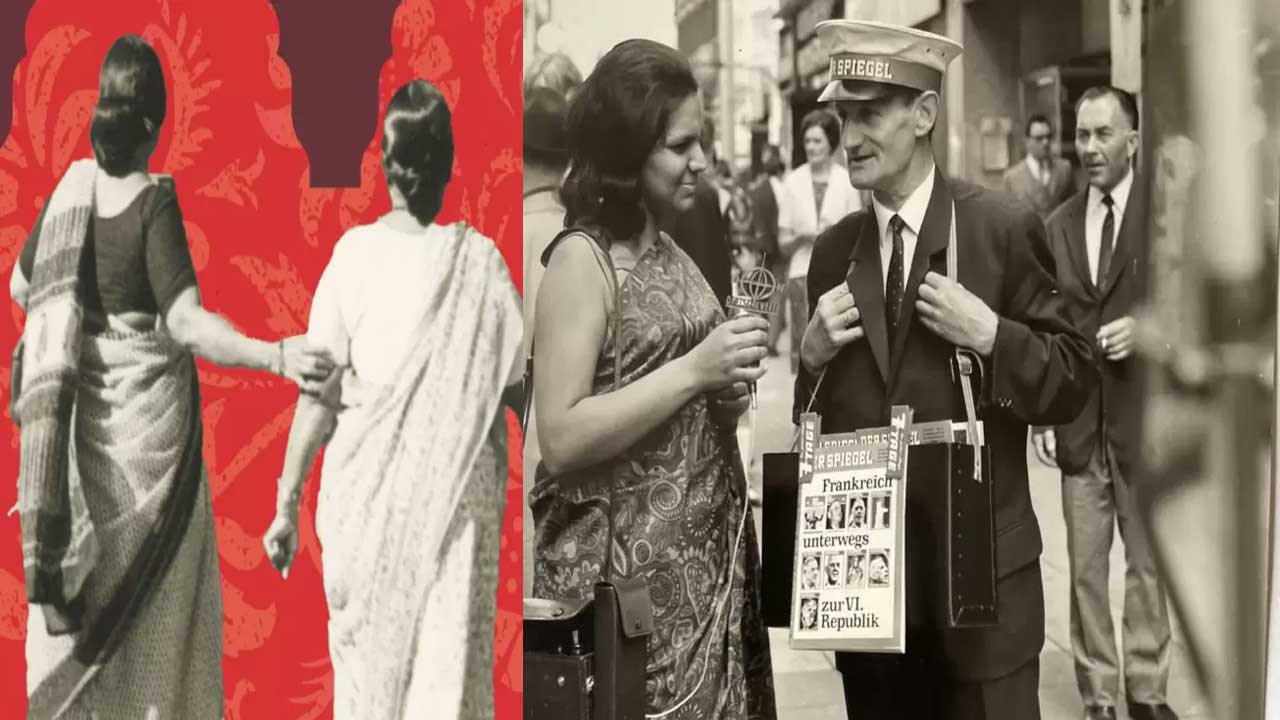
New York City, NY, USA: The New York Historical Society has launched a new exhibition titled The New York Sari, offering an in-depth look at how the sari has influenced the lives and identities of South Asians living in New York City from the Gilded Age to the modern day.
The exhibition will remain open from September 12 through April 26, 2026.
Designed to show the sari as a vital thread in New York City's multicultural landscape, the display explores how its wearers and creators have expressed identity, migration stories, gender roles, and evolving cultural practices over different eras and neighbourhoods.
The narrative begins with some of the earliest South Asian footprints in the city—including the often-overlooked links to Coney Island’s earliest theme park—and moves forward to examine today’s vibrant South Asian communities across the boroughs.
Curators Salonee Bhaman and Anna Danziger Halperin emphasise that the exhibition illustrates how these communities have balanced long-standing traditions with aspirations for a more inclusive and progressive future.
More than a piece of clothing, the sari is presented as a historical lens through which changing migration patterns and labour movements can be understood.
Archival collections and artefacts show how South Asian immigrants in the 19th and 20th centuries used the sari as a way to maintain cultural roots even as they adapted to new social, legal, and economic realities in the United States.
Other sections of the exhibition document the sari’s evolving significance—from handwoven fabrics and regional draping methods to modern interpretations created by digital influencers, sustainability-oriented designers, and artists from younger diaspora generations.
Curated by Bhaman, a Mellon Foundation Postdoctoral Fellow in Women’s and Public History, together with Danziger Halperin, Director of the Centre for Women’s History, the exhibition positions the sari within the larger stories of gender and migration in New York, rather than simply categorising it as a fashion item.
The exhibition is supported by New York City Council Member Shekar Krishnan, with Epicentre NYC serving as the community media partner, along with additional backing from Joyce B.