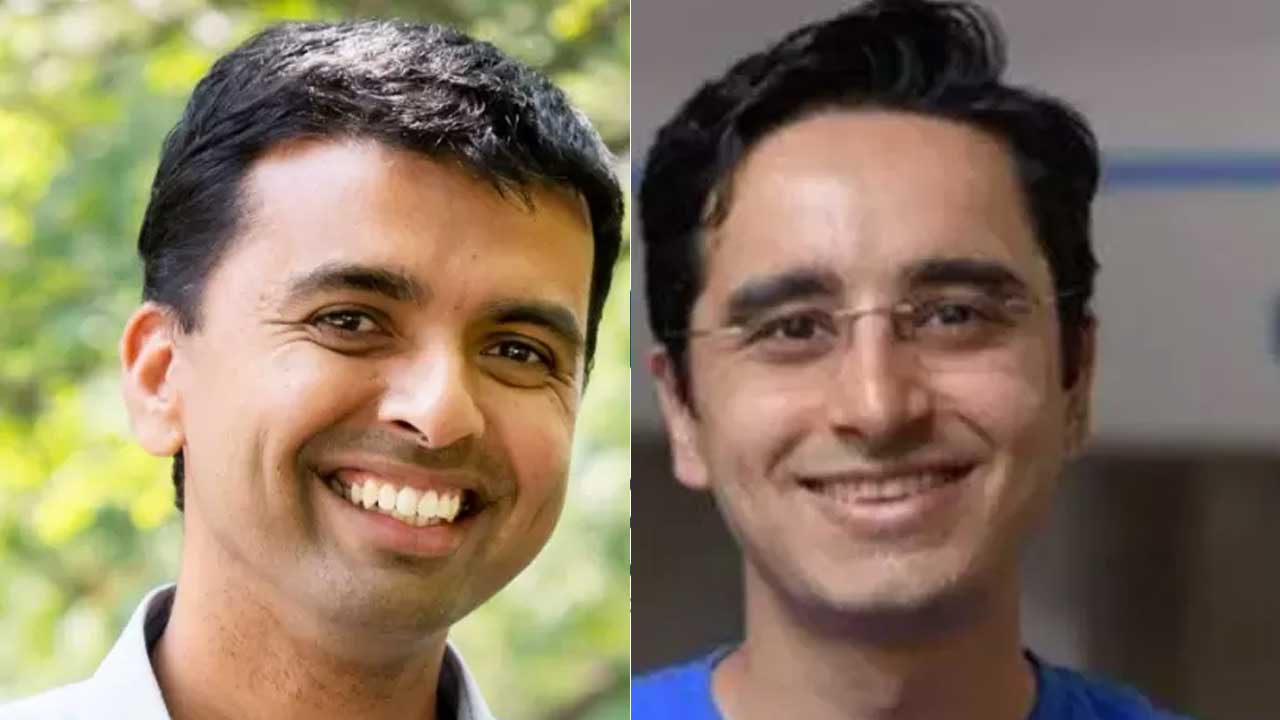
Atlanta, Georgia, USA: Saad Bhamla and Arvind Murugan join an elite international group of eight researchers recognised for groundbreaking work.
Two researchers of South Asian origin have been included in the 2025 class of Schmidt Polymaths, a global initiative that supports scientists and engineers pursuing innovative, cross-disciplinary projects. Saad Bhamla from the Georgia Institute of Technology and Arvind Murugan from the University of Chicago are among the eight honorees announced by Schmidt Sciences on September 16.
Each of this year’s awardees will be granted up to $2.5 million over a five-year period to advance high-impact projects that introduce novel methods or explore new research directions. Now in its fifth cohort, the program is designed to encourage high-risk, early-stage research that traditional funding sources may overlook.
Bhamla, a graduate of the Indian Institute of Technology Madras and an associate professor at Georgia Tech’s School of Chemical and Biomolecular Engineering, intends to focus on developing cost-effective technologies for large-scale societal challenges. His projects will include AI-driven point-of-care diagnostic tools for low-resource settings, as well as autonomous morphing machines capable of learning, evolving, and adapting in ways similar to biological systems.
Murugan, an associate professor of physics at the University of Chicago, will conduct experiments on how molecules can compute and learn naturally. His research aims to demonstrate how evolutionary principles and synthetic biology can utilise the inherent properties of matter without constant human intervention, potentially revealing new insights into molecular systems.
Wendy Schmidt, who co-founded Schmidt Sciences alongside Eric Schmidt, highlighted the mission behind the program. “We live in a deeply interconnected world, but scientific study often separates it into narrow categories,” she said. “Schmidt Polymaths take a holistic view, pursuing knowledge beyond traditional boundaries and expanding the limits of possibility. Their discoveries can guide us toward a healthier future for both people and the planet.”
Schmidt Polymaths are selected from universities worldwide and are required to have received tenure or an equivalent distinction within the past three years. Past cohorts have contributed to breakthroughs in sensor technologies, atomic-scale experiments, AI-driven mathematical discovery, and algorithmic biology.