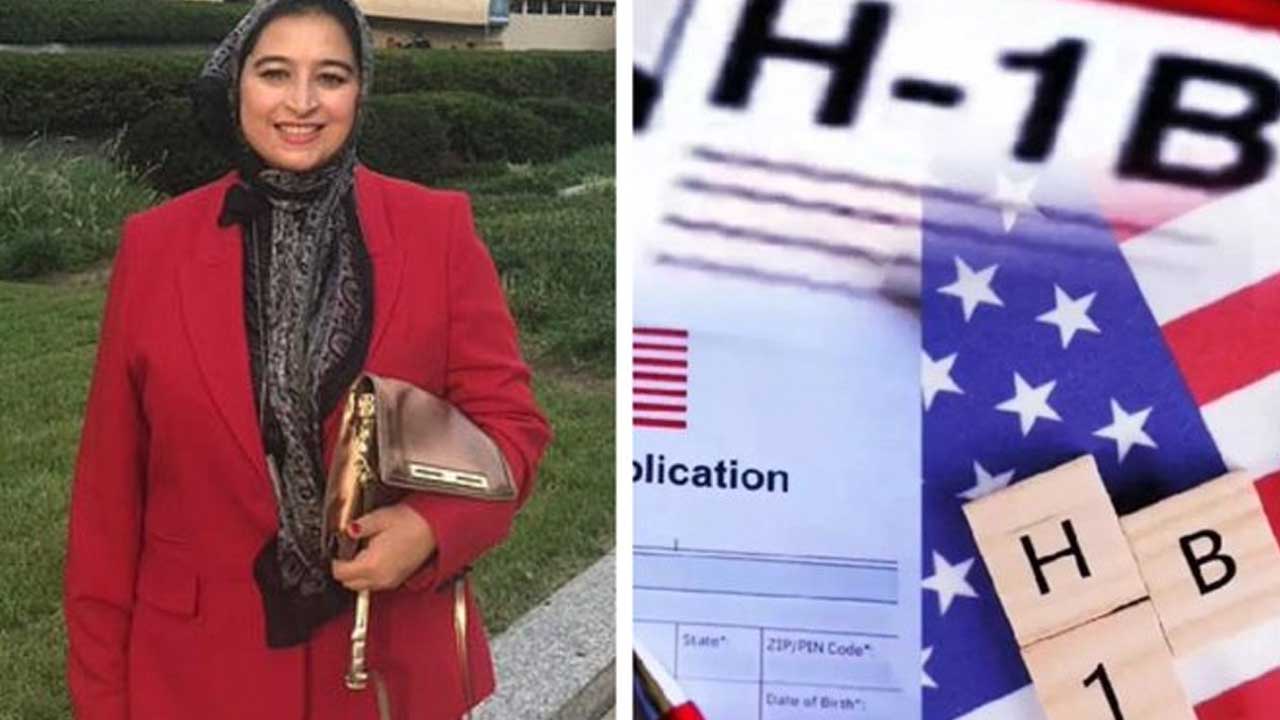
Washington, D.C., USA: An Indian-American Foreign Service officer has accused India of facilitating widespread H-1B visa fraud for nearly two decades, stating that the problem persists despite repeated alerts to U.S. authorities.
Speaking on November 20 in a personal capacity during the Centre for Immigration Studies’ podcast Parsing Immigration Policy, Mahvash Siddiqui discussed her experience with host Jessica Vaughan, director of policy studies at the centre. Siddiqui said she encountered what she described as “industrialised fraud” while reviewing more than 51,000 H-1B visa applications at the U.S. Consulate in Chennai, India, between 2005 and 2007.
“Visa fraud is common practice in India,” Siddiqui explained, estimating that 80–90 per cent of the applications she examined included falsified documents, fabricated degrees, or unqualified applicants.
She pointed to practices such as proxy interviews, forged certificates, and a well-established document-forgery network in Hyderabad’s Ameerpet district. On the U.S. side, she alleged that some U.S.-based managers—often of Indian descent—facilitated kickbacks to direct positions toward specific candidates.
The Chennai consulate continues to process a large volume of H-1B petitions. In fiscal year 2024, it handled approximately 220,000 H-1B visas and 140,000 H-4 dependent visas, making it the busiest U.S. consulate for these programs globally.
Siddiqui said efforts by her task force—comprising roughly 15 Foreign Service officers—to conduct focused anti-fraud checks were terminated after being branded a “rogue operation,” due to political pressure from senior officials. “The problem was so entrenched that it was difficult for our small team to challenge the system,” she said.
A report released alongside her interview by the Centre for Immigration Studies, titled ‘Industrialised’ Fraud in the H-1B Visa Program, supports Siddiqui’s claims and warns that such abuses threaten U.S. jobs, security, and economic well-being. According to the report, fraud allows outsourcing companies to replace American STEM graduates with lower-paid foreign workers.
Siddiqui criticised the program for straying from its original intent of addressing genuine skill shortages, arguing that it “undermines local talent” and describing the idea of a chronic U.S. STEM shortage as a “myth.” She cited her experience in Southern California, where highly skilled graduates from the University of California system have often been displaced by Indian IT professionals.
As Congress and the incoming administration consider revising H-1B regulations amid layoffs in the tech industry and rising unemployment among U.S. STEM graduates, Siddiqui’s account, nearly twenty years after her posting in Chennai, underscores the need for significant reforms or a complete restructuring of the program.