Washington, D.C., USA: U.S. lawmakers expressed unease over India’s engagement with Russia and China during a recent hearing. Senators questioned Sergio Gor, President Donald Trump’s nominee for Ambassador to India, on how he would ensure that New Delhi remains aligned with U.S. strategic interests.
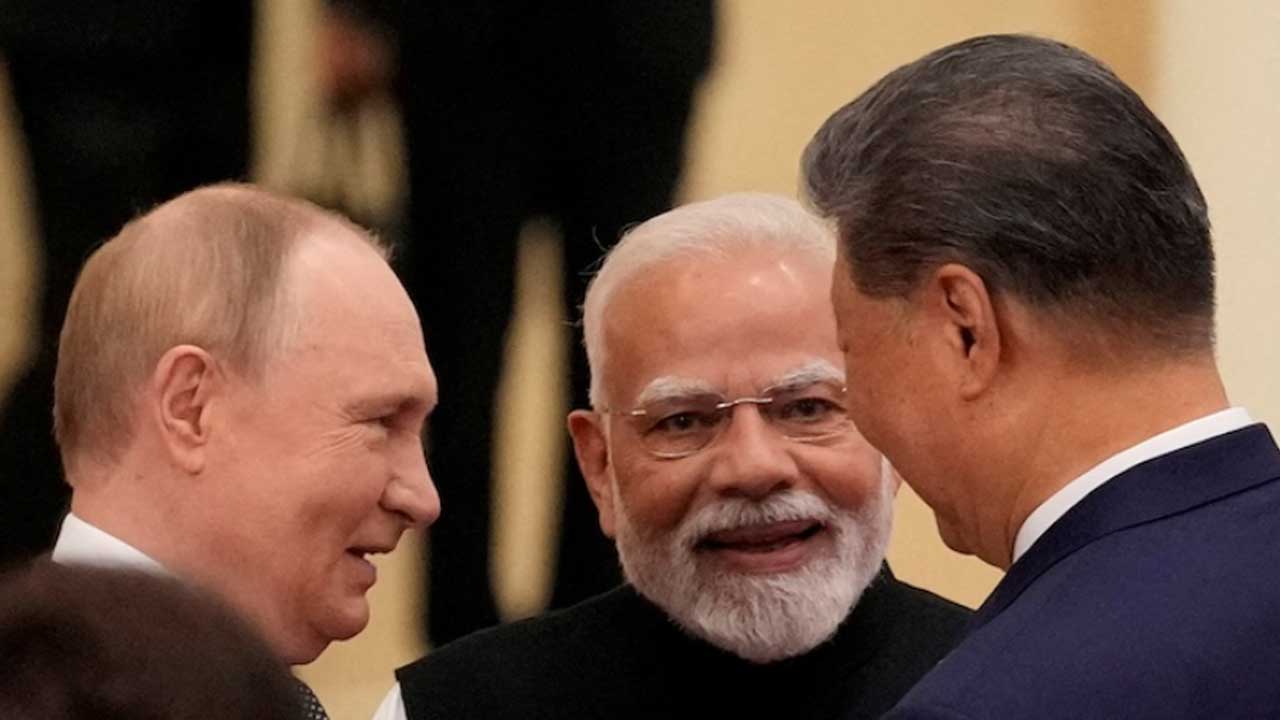
At the Senate Foreign Relations Committee session, concerns emerged about India’s role amid the evolving global landscape. Senator Jeanne Shaheen (D-NH) highlighted discomfort over “Prime Minister Modi appearing alongside Vladimir Putin and Xi Jinping at the Beijing summit earlier this month,” cautioning that “closer ties between India and China could be a serious setback for U.S. interests.”
Mr. Gor acknowledged the optics but emphasized that India’s alignment is still closer to the United States than to China. “India shares far more common values with us than with Beijing. As the world’s largest democracy with 1.4 billion people, our shared interests are significant,” he remarked.
Focus on Russian Oil and Trade Tariffs
The discussion turned sharper when it came to India’s energy imports from Russia. “India’s reliance on Russian energy is deeply concerning,” the Committee Chair said, noting that “President Trump has acted to curb India’s purchase of Russian oil,” and that the incoming ambassador would be expected to “strengthen those efforts.”
Mr. Gor responded that the administration is actively seeking solutions. “Currently, we are not far apart in negotiations. Reducing India’s purchase of Russian oil remains a top priority for this administration,” he stated.
Senator Bill Hagerty (R-TN) underscored the broader stakes: “India buys Russian crude at a discount, refines it, and exports it to Europe. We need European countries to rely on U.S. energy instead and limit Russia’s revenue flow.”
Interpreting the India-China Connection
On India’s relationship with China, Mr. Gor minimized the symbolic significance of the Beijing summit. “Often, countries express one stance publicly and act differently behind closed doors. Under this administration, our partners know where we stand, which India has appreciated,” he said.
Senator Tim Kaine (D-VA) urged continued caution: “We have long believed Russia and China cannot cooperate seamlessly. Yet, we are witnessing a growing alignment between Russia, China, Iran, and North Korea. How do we stay firm with India when necessary while keeping them close?”
Quad and Regional Security Concerns
Beyond the focus on Russia and China, Senators highlighted the Indo-Pacific security framework. Senator John Barrasso (R-WY) pointed to the Quad, stating, “Communist China remains the primary geopolitical threat to both India and the U.S.”
Mr. Gor confirmed ongoing engagement: “The President is committed to maintaining continuous cooperation with the Quad. Just last week, 500 Indian troops trained alongside U.S. forces in Alaska.”
Navigating a Diplomatic Balancing Act
The hearing underscored the complex challenge of U.S. policy: pressing India on its dealings with Russia while counting on it to counterbalance China. “Our expectations from India are sometimes higher than for other nations,” Mr. Gor admitted.
For India, the session reflected Washington’s attention to its energy strategy and diplomatic positioning. For the United States, the goal remains to keep New Delhi engaged while navigating unresolved issues such as tariffs, oil imports, and great-power diplomacy.