Countries with the Largest High-Speed Train Networks Worldwide
Trains remain a crucial mode of public transport in many nations, offering an affordable and comfortable travel option. For passengers who cannot afford air travel, trains provide an accessible solution for both short and long-distance journeys. Recognising this, several governments have invested heavily in the expansion of their railway networks. In addition to extending existing routes, high-speed trains are being introduced to ensure faster travel across longer distances. These initiatives aim to modernise rail transport while offering passengers advanced facilities.
Across the globe, authorities are striving to make rail travel quicker, more convenient, and environmentally friendly. As part of this effort, high-speed rail networks are growing rapidly. Among these, China leads the world with approximately 65,000 kilometres of high-speed tracks. When compared to the combined high-speed networks of other countries, China’s network remains far ahead. Following China, Spain, Japan, France, and Germany occupy the next positions in terms of network length.
China – 64,775 km
China boasts the largest high-speed railway system in the world. In total, the nation has developed 64,775 kilometres of high-speed rail, with more than 40,000 kilometres currently serving passengers. An additional 13,000 kilometres are under construction, and plans are underway to further extend the network by over 11,000 kilometres in the coming years.
Spain – 5,579 km
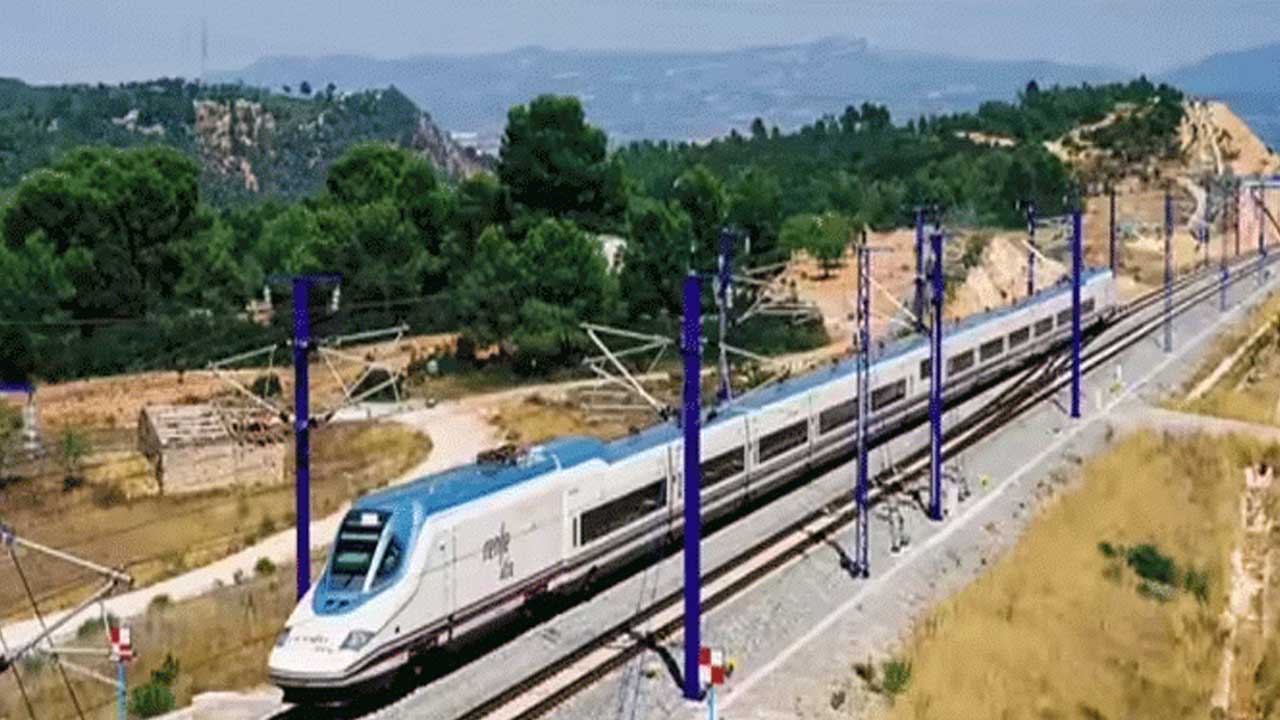
Spain ranks second globally with its high-speed train network stretching 5,579 kilometres. Key routes connect major cities such as Madrid, Seville, Barcelona, and Valencia. Spanish high-speed trains are known for their punctuality, offering travellers a reliable and convenient option, particularly for tourists exploring the country’s famous destinations.
Japan – 3,677 km
Japan’s Shinkansen, commonly known as the Bullet Train, represents one of the most advanced railway networks worldwide. Operational since 1964, the system places a strong emphasis on passenger safety. Japan currently has 3,677 kilometres of high-speed rail, of which 3,081 kilometres are operational. Shinkansen trains are renowned for their punctuality, with delays rarely exceeding 30 seconds, making them a source of national pride.
France – 4,460 km
France has been at the forefront of modern high-speed rail development. Its network spans 4,460 kilometres, with 2,735 kilometres currently in operation. The French high-speed trains connect Paris with major domestic cities as well as international destinations. For decades, France’s network has been celebrated for its speed, precision, and engineering excellence.
Germany – 2,009 km
Germany’s Intercity Express (ICE) system ranks fifth in the world for high-speed rail length, covering 2,009 kilometres. The network links major German cities, including Berlin, Munich, Frankfurt, and Cologne. Germany’s high-speed trains are praised for their advanced technology, streamlined design, and passenger-friendly amenities. Meanwhile, India is also working to expand its high-speed railway system, but it has not yet reached the top five globally.