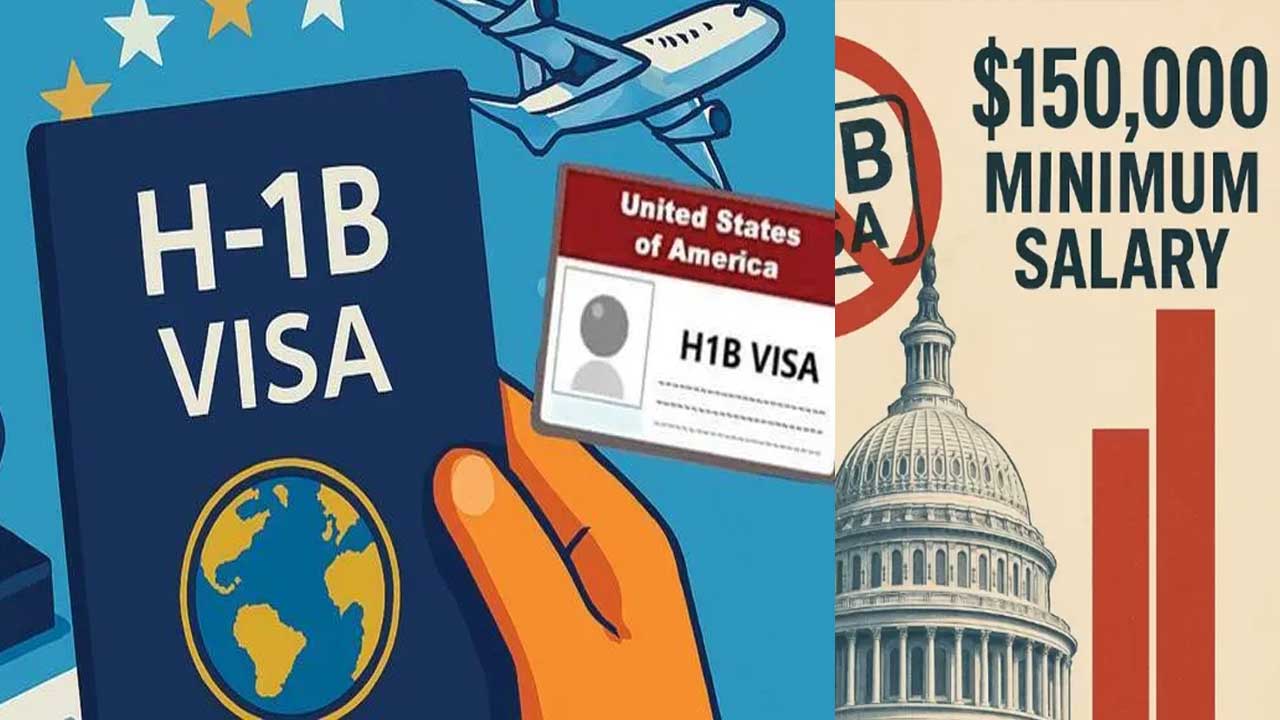
Washington, D.C., USA: In 2024, leading tech companies such as Amazon, Meta, Google, Microsoft, and Apple were among the top recipients of new H-1B approvals, maintaining a trend that has persisted for over a decade.
A senior Republican lawmaker has put forward a bill aimed at eliminating the Optional Practical Training (OPT) program for international students and setting a minimum annual salary of USD 150,000 for H-1B visa holders.
Senator Jim Banks from Indiana unveiled the American Tech Workforce Act of 2025, describing it as a major reform of high-skilled immigration policies. He argued that U.S. businesses have become overly dependent on foreign workers, often sidelining American professionals in the process.
The proposed law would abolish OPT — which currently enables international graduates to work in the U.S. for up to three years — while also requiring employers to either pay H-1B workers at least USD 150,000 annually or match the wages of comparable U.S. employees, whichever is higher.
According to the bill, the H-1B visa system is being exploited to replace American workers with cheaper foreign labour.” It points to research showing that 60% of H-1B visas are issued at pay rates below median local wages, a trend lawmakers say undermines domestic employment.
Targeting Big Tech and OPT
The legislation emphasises that large technology firms dominate the H-1B system. In 2024 alone, Amazon, Meta, Google, Microsoft, and Apple were among the top eight companies securing the most visa approvals, extending a long-standing pattern.
Senator Banks also took aim at OPT, calling it an improper expansion launched during the Obama era. Under OPT, STEM graduates can stay in the U.S. while companies gain payroll tax exemptions. Critics claim this gives employers both a tax advantage and access to a cheaper labour pool.
If passed, the measure would completely terminate OPT. All pending petitions would be denied, fees refunded, and international students on F-1 visas would lose work authorisation immediately after completing their studies.
Minimum Wage Rules and Outsourcing Restrictions
The proposal sets an initial wage threshold of USD 150,000 for H-1B employees, with yearly adjustments tied to inflation. Employers must also guarantee that foreign workers are not paid less than U.S. citizens or permanent residents in comparable roles within the last two years.
The bill places restrictions on outsourcing arrangements as well. If an H-1B worker is assigned to a third-party location, the visa would be valid for only one year. Such contracts must clearly outline specific duties for the entire requested period, not speculative roles.
To combat wage suppression, immigration authorities would be instructed to prioritise higher-paying applications, regardless of when they were submitted.
Preventing Unauthorised Work Programs
The legislation further specifies that no federal agency may create or extend work programs for foreign nationals without direct approval from Congress. This provision is designed to block future administrations from introducing initiatives like OPT through regulatory action instead of formal legislation.