Bethesda, Maryland, USA: An Indian-American Army surgeon, Maj. Jagatkumar Patel, has been recognized for developing an innovative minimally invasive brain tumor surgery that allows surgeons to remove certain brain tumors without opening the skull, significantly improving patient recovery.
According to the Pentagon, Patel collaborated with Army neurosurgeon Lt. Col. Charles Miller to perform the procedure through the patient's nasal passage. The technique is designed for tumors located at the base of the skull and eliminates the need for conventional open-brain surgery in suitable cases.
Patel explained that traditional skull-opening procedures are often more demanding for patients, while the new approach provides better access to specific tumors and increases the chances of complete removal when the tumor's size and location are appropriate.
The procedure was recently performed on Marine Staff Sgt. Andy Archer, who had experienced severe headaches for nearly 15 years. After developing vision problems, an MRI scan revealed a 4.4-centimeter tumor near the pituitary gland that was pressing against the optic nerve.
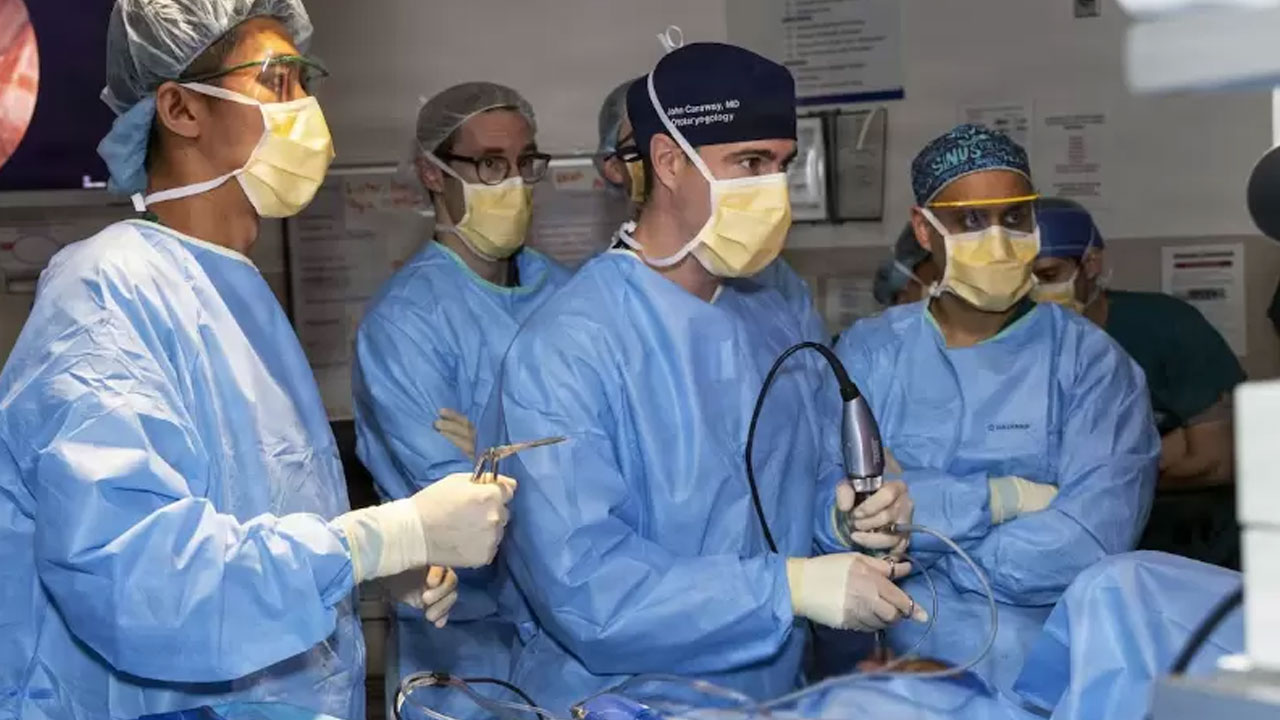
Archer was treated at the Walter Reed Army National Military Medical Center in Bethesda, Maryland. Patel carefully planned the surgical pathway through the complex nasal anatomy, while Miller removed the tumor using high-definition endoscopic guidance.
Patel operated the endoscopic camera to provide close-up visualization throughout the procedure, enabling the tumor to be safely extracted through the nose. He emphasized that the successful outcome was the result of close teamwork between both surgeons.
Just two days after surgery, Archer showed no visible signs of undergoing major brain surgery. He was able to sit up in the surgical intensive care unit, and his vision had already begun to improve.
Patel noted that the minimally invasive procedure is only suitable for patients whose tumors are positioned appropriately, but it represents a significant advancement in skull base surgery and could reduce recovery time for eligible patients.