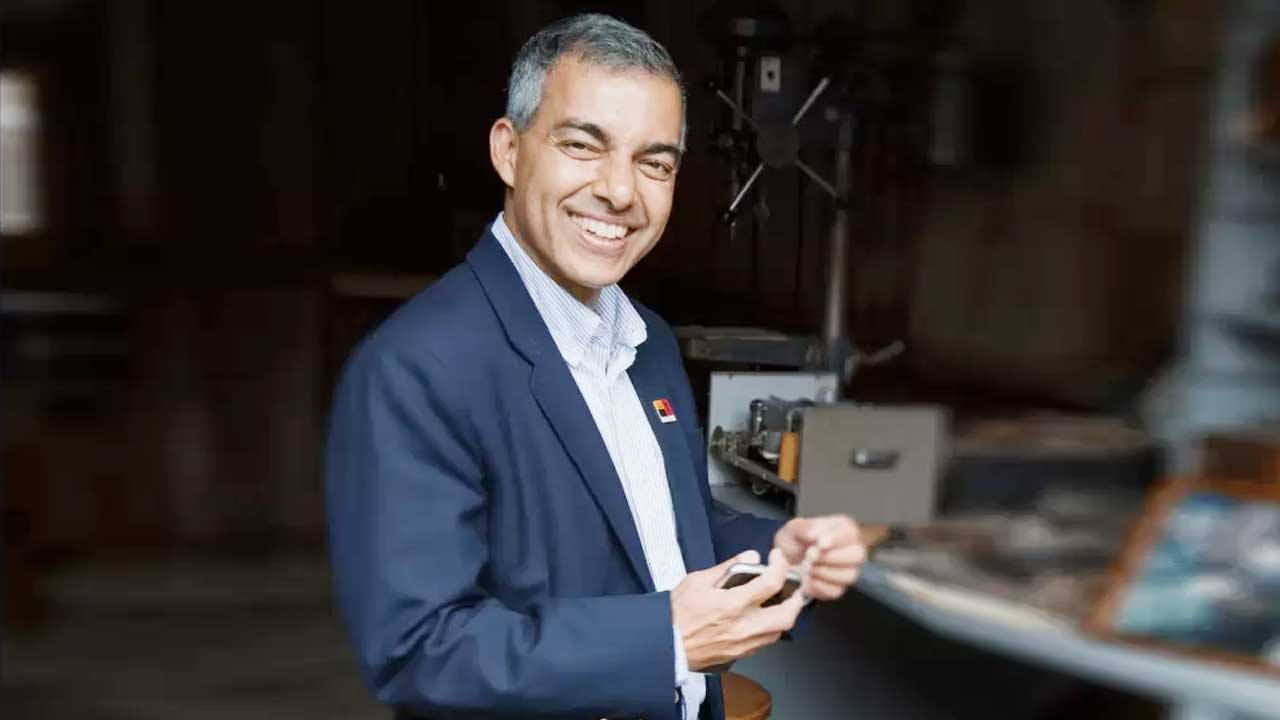
Canberra, ACT, Australia: Dr Vikram Sharma, an Indian-origin technologist and founder of the cybersecurity firm QuintessenceLabs, has been honoured with Australia’s Prime Minister’s Prize for Innovation, one of the nation’s most prestigious scientific distinctions.
The award, valued at $250,000, recognises Sharma’s exceptional contribution to transforming advanced quantum science research into commercially viable cybersecurity technologies that are now deployed by organisations around the world. His company, headquartered in Canberra, specialises in quantum-based data protection systems designed to defend against emerging digital threats, with products currently utilised across four continents.
Expressing his gratitude, Sharma described the award as “a remarkable acknowledgement of our team’s dedication and vision—something beyond what we could have ever imagined.”
He highlighted the enormous potential of quantum science for Australia, noting that scientists, innovators, and policymakers are working collectively to establish the nation as a global leader in quantum technology education and research.
This recognition follows significant investments in QuintessenceLabs. Earlier this year, the Australian government’s $15 billion National Reconstruction Fund became the lead investor in the company’s $20 million funding round, contributing $15 million. The capital is being used to set up a new manufacturing facility in Canberra and to create around 15 new specialised positions in the quantum technology sector.
QuintessenceLabs’ innovation portfolio includes a Quantum Random Number Generator for encryption, cryptographic key management systems, and quantum key distribution solutions designed for advanced data security
Dr Sharma, a Fellow of the Australian Computer Society, is among eight recipients of the Prime Minister’s Prizes for Science this year. The awards cover diverse fields such as life sciences, physical sciences, education, and a new category celebrating Aboriginal and Torres Strait Islander Knowledge Systems.
Other honorees include Distinguished Professor Lidia Morawska from the Queensland University of Technology, recognised for her groundbreaking research on air quality; Dr David Khoury of the Kirby Institute at UNSW, for infectious disease modelling; and Professor Yao Zheng from the University of Adelaide, for developing sustainable hydrogen energy from seawater.
Now in its 26th year, the Prime Minister’s Prizes for Science honour achievements that connect cutting-edge research with real-world innovation and impact.
Dr Sharma emphasised the value of collaboration with academia and government institutions, stating, “Strong partnerships with universities are essential—early-stage research flourishes under the brilliance found in academic environments.”